
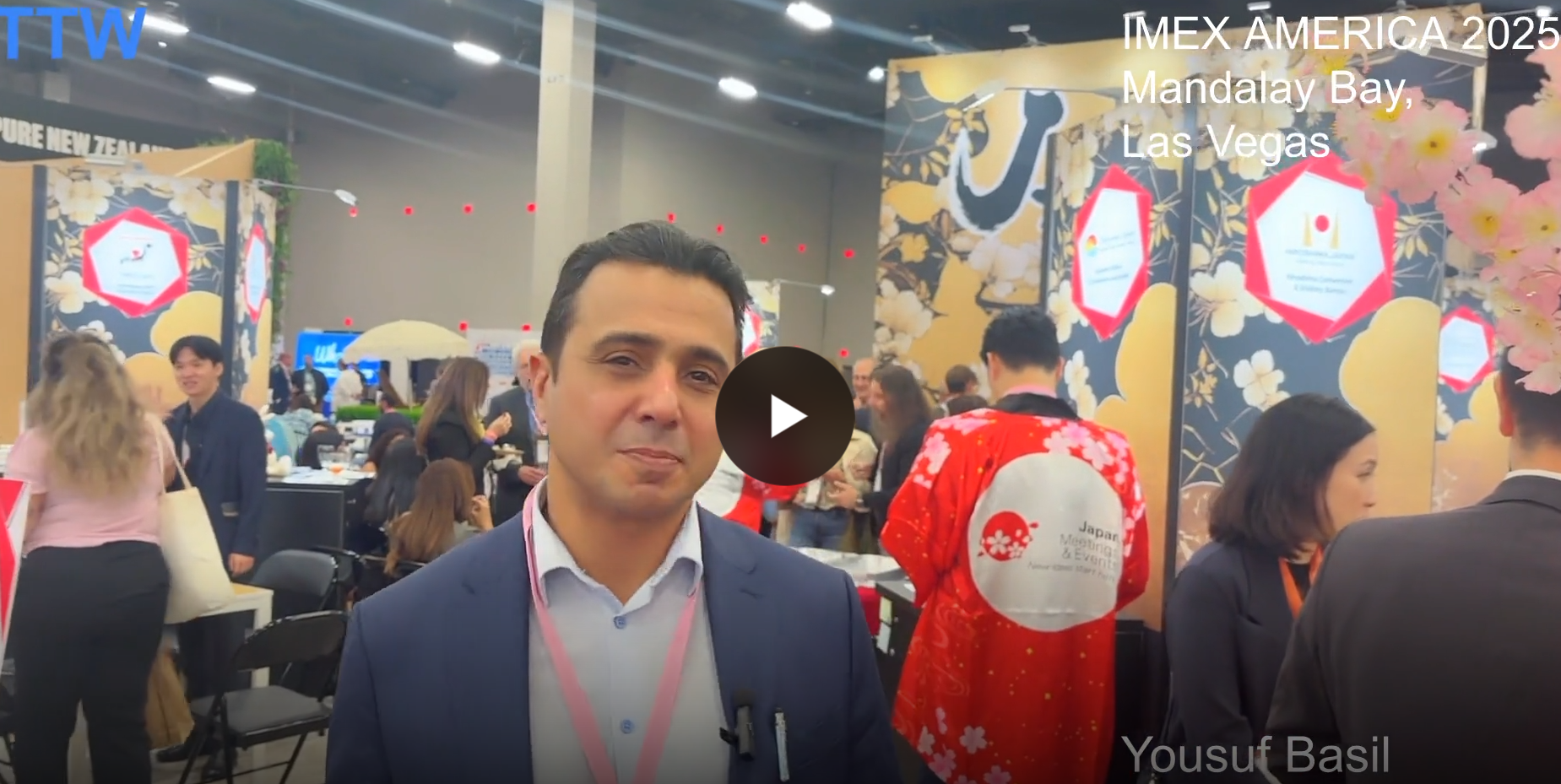
More Than a Trip, It's a Mosaic: Japan's Regional Diversity Earns It Top Incentive Honors
By Yousuf Basil and Jennifer Z. Deaton
(Las Vegas, USA) All the exhibitors at IMEX America 2025, held at Mandalay Bay in Las Vegas, came eager to showcase their businesses and make deals. Japan, though, stood out—marching into the show already a winner. Even before the opening ceremony, before the first handshake on the floor, Japan had been crowned “Best Incentives Destination (Asia)” for 2025.
The honor comes from the M&C Asia Stella Awards, which recognize outstanding performance and innovation across the MICE sector (Meetings, Incentives, Conventions, Exhibitions). Japan earned the majority of votes in the incentives category—clear validation of its reputation for quality experiences and high visitor satisfaction.
This prestigious recognition highlights world-class infrastructure, exacting service standards, rich culture, and diverse incentive experiences that make Japan a standout destination in Asia.
On the IMEX America exhibition floor, Japan’s pavilion is buzzing—an energy you can’t miss.
Why Japan
Mr. Lewis Ream, with the Japan National Tourism Organization, told TTW that Japan’s “secret” is the seamless connectivity between its diverse cultures and destinations.
“One of Japan’s main strengths is the diversity of options for host cities for incentive trips and conferences,” he said. “Japan has so many regional cultures and traditions, giving travelers the chance to visit several cities and connect with different cultures in a single itinerary.”
In a statement, the M&C Asia Stella Awards organizing body added:
“The result reflects that Japan is highly regarded by incentive planners in the Asia region for offering high-value-added experiences, quality facilities, and excellent service in the field of incentive travel.”
If there’s one quality that sets Japan apart, Mr. Ream tells me is The Attention to Detail—a value deeply embedded in the country’s collective culture. On that point, there’s little debate.
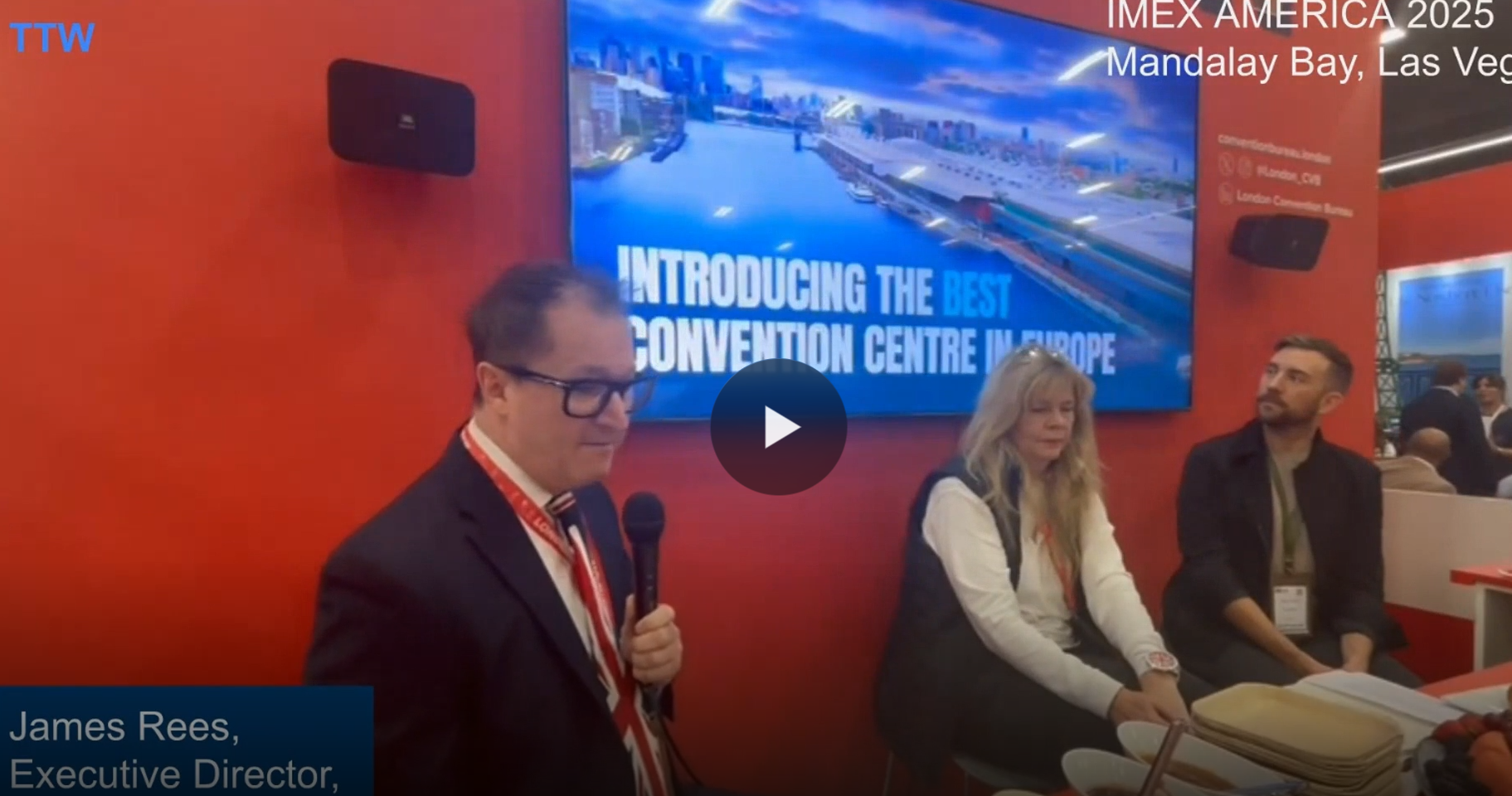
London’s New Crown Jewel”: ExCeL Pairs Big Investment with Planner Priorities
After a $340M expansion—and with the Elizabeth line at its door—Excel London makes a product-first case at IMEX America 2025: sustainability, F&B by design, connectivity, and a waterfront built for activations.
By Yousuf Basil and Jennifer Z. Deaton
LAS VEGAS — “This is what we feel we are: the new jewel in London’s crown… London and Excel have created the best convention center in Europe.” — James Rees, Executive Director, Excel London
The line set the tone. Excel’s IMEX America briefing was less boast than blueprint: a $340 million expansion scaling the venue to ~1.3 million sq. ft. across two levels, plus London’s multibillion-pound Elizabeth line now at Excel’s front door. Together, those investments anchor Excel’s pitch to planners—and its belief that it stands as Europe’s benchmark convention venue, in the gateway to Europe.
Designed around what planners say matters now
Sustainability — non-negotiable.
Excel says the campus is carbon neutral, with a published 2025 Net Zero Transition Plan and a Net Zero by 2045 target. On catering, Compass Group is driving toward Net Zero by 2027, pairing sustainability with healthy, stay-sharp menus that suit long program days.
F&B as a program asset
What used to be “refuel” has become part of experience design. Clients are specifying variety, nutrition, and pacing aligned to sessions so delegates keep their edge.
Connectivity that changes the day
With an Elizabeth line station on the doorstep, Excel is ~15 minutes to the City and ~43–45 minutes direct to Heathrow (LHR), with throughput up to 36,000 delegates per hour across the network. That door-to-door speed is shaping RFP choices.
Scale, light, water
The expansion delivers six contiguous halls below (about 125,000 sq. ft. each) and ~37 flexible rooms above with movable airwalls. High ceilings, extensive daylight, and a ~200-meter waterfront balcony create options—from fresh-air breaks to intimate hosted events. The 180-acre campus layers in hotels, restaurants, and promenades so delegates stay on foot and still feel in London.
Kevin Lang, Director of Global Accounts, Opus: “Scale, daylight, and access in one place—boxes North American shows struggle to tick simultaneously.”
Who’s booking—and why
Excel reports U.S. organizers now represent ~60% of its convention and congress business by value (up from ~37% a year ago), with pipelines and programs spanning Amazon, Google, Microsoft, Salesforce, Gartner, INTA, AAIC and more—tech, enterprise, associations, science. The common thread, leadership said: a venue built around sustainability, F&B quality, and connectivity, in a city delegates already want to visit. Add abundant airlift—read: plenty of nonstop and direct flights—English as the working language, and a strong reputation for safety, and the destination case strengthens further.
Tracy Halliwell, Director of Tourism & Conventions, London: “America is our biggest inbound market. Airlift, language, sector strength—London is an easy yes, and the city’s appeal does the rest.”
Quick facts for planners
Total space: ~1.3M sq. ft. post-expansion
Halls / meeting rooms: 6 contiguous halls; ~37 flexible rooms (upper level, movable airwalls)
Daylight & outdoor: Extensive glazing; ~200 m balcony for breaks or small activations
Transit: Elizabeth line at the door; ~15 min to the City; ~43–45 min to LHR
Throughput: Up to 36,000 delegates/hour on the line
Sustainability: Carbon-neutral campus; Net Zero 2045 target; Compass Group Net Zero 2027 (F&B)
Bottom line: Excel’s case is investment plus fit—greener operations, better food by design, door-to-door speed, and a waterfront venue that gives delegates light, air, and options. For many RFPs, that combination makes the “why London” slide write itself.